By Zahid Nawaz, Founder of Motion Graphix ·
Quick answer: A product demo video shows software solving one real task, screen by screen, in 60 to 120 seconds for marketing or two to four minutes for sales. The ones that convert lead with the outcome instead of the interface, use the real UI cleaned up and animated, work with the sound off, and end on the finished result. This guide covers the four types, the script structure, length, where to place it, how demo videos drive feature adoption and sales, what they cost and how to produce them, with links to real examples.
What is a product demo video?
A product demo video is a short walkthrough of your software completing a task a buyer cares about. It differs from an explainer, which sells the problem and the promise, and from a tutorial, which teaches an existing user every click. A demo sits between them: it proves the product does what the explainer claimed, to someone who has not bought yet. The full distinction is in demo video versus explainer video.
The four types of product demo video
- Screen recording. Fastest and cheapest. Works when your UI is clean, your demo data is tidy and the viewer is warm. Looks like a support video to a cold visitor. Loom versus a produced demo covers when to upgrade.
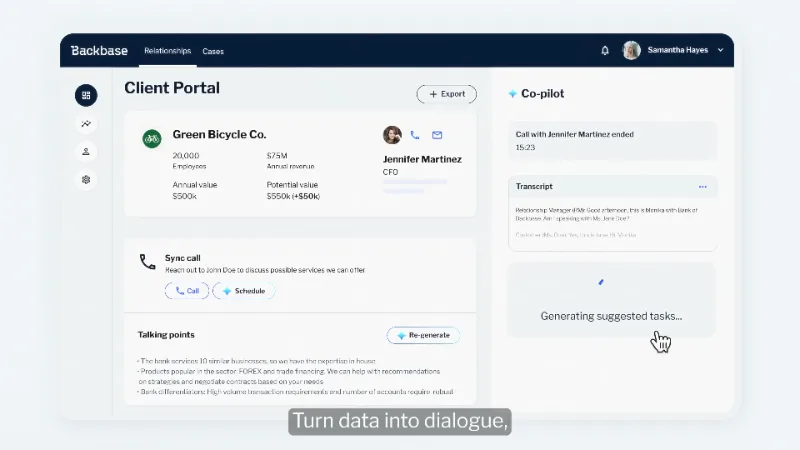
- Animated demo. The real interface, rebuilt or captured and then animated: smooth cursors, realistic data, zooms into the moment of value, no notifications or jitter. Pixel-perfect across devices and updatable from source files when the UI changes. This is what we build most.
- Live action plus screen. A presenter or founder on camera with product shots cut in. Strongest for trust-heavy sales and founder-led brands.
- Hybrid. Animated framing (the problem, the system view) around real screens (the proof). The best of both for complex products.
The formats inside a demo programme
- Launch or hero demo (60 to 90 seconds): the flagship for the homepage, launches and ads.
- Feature spotlight (15 to 30 seconds): one feature, one outcome, built for release notes and social. See product update videos.
- Onboarding clip (15 to 45 seconds): shows a first-run task inside the product at the empty-state moment.
- Sales cut (30 to 60 seconds): tailored to a persona or use case for outbound and follow-ups.
- Deep walkthrough (two to four minutes): for docs, onboarding and sales follow-ups, never the homepage.
How to script a demo that sells
Problem, before state, transformation, result. Do not tour the navigation bar. Pick the one workflow your buyer came for, show it end to end, and let the interface details sell themselves in passing. Concretely:
- Open inside the product on the problem state within three seconds: the cluttered inbox, the forty-item dashboard, the blank contract.
- Name the task in one line of on-screen text so the muted viewer knows what they are about to see.
- Run the workflow once, start to finish, cutting every detour. Smooth the cursor, tidy the data, zoom into the moment of value.
- Show the finished artefact: the sent email, the exported report, the paid invoice. If the viewer never sees the finish line, they do not believe it exists.
- One call to action, the same verb as the button next to the player.
Our script guide covers the beats and word counts; twelve product demo examples show the structure in finished videos.
How long should a product demo video be?
Completion drops sharply after 60 seconds on landing pages. Use a 60 to 120 second hero demo for the homepage and ads, and keep the deep walkthrough for docs, onboarding and sales follow-ups. Two videos, two jobs. In our library of 161 SaaS videos, app demos run a median of 64 seconds, a few seconds longer than explainers because they have to show real UI; the full data is in how long should an explainer video be.
Where the call to action goes
- Mid-video, right after the biggest “aha” moment, as a lower-third prompt.
- End card, one action, five seconds of hold time.
- Around the video: the button next to the player should repeat the same verb, and the follow-up email should carry the same clip.
Where to place a demo video
Above the fold for warm traffic that searched your product name. Below a strong headline for cold traffic, because copy earns the play. Autoplay muted with captions on landing pages; sound-on only in ads where the platform expects it. On the pricing page, next to the plan most buyers choose. In the sales deck, as the slide before the price. Our landing page video guide has placement data.
How demo videos improve feature adoption
Features fail when users never understand what they do. A short demo fixes the explanation layer at three points. In onboarding, a clip at the empty-state moment shows the outcome before the user invests effort, which lifts activation. In release announcements, a 20-second animation in the email or in-app banner outperforms a paragraph of notes because it shows the result rather than the instructions. In the help centre, animated walkthroughs deflect how-do-I tickets and stay accurate longer than screenshots. The mechanism is simple: a demonstrated outcome is processed in seconds, and video holds attention long enough for it to land. See onboarding videos.
How demo videos support sales
- Outbound: a personalised email with a 30-second feature clip gives prospects a reason to reply without booking a call first.
- Discovery follow-ups: reps send the exact clip that matches the pain discussed, keeping momentum between meetings.
- Champion enablement: your internal champion forwards a crisp 60-second demo to the buying committee, a far better artefact than a 40-minute recorded call.
- Proposals: embedded clips keep the product visible while procurement drags on.
Our guide for sales teams covers the workflow; the JobAdder case study is an example of a demo scripted from sales-call transcripts.
Metrics worth tracking
For adoption: activation rate on flows that include the clip, feature usage after release announcements, support-ticket deflection. For sales: reply rate on video outbound, clip share-throughs, demo-to-meeting conversion. For the website: watch-through rate and signup conversion on pages with the demo versus without. Explainer video ROI explains how to set these up.
Why demos fail
Four patterns come up again and again: the script tries to say everything, so nothing sticks; the video mirrors the interface instead of the value; production has no stage gates, so feedback arrives after the animation is finished; and the demo is treated as a single asset instead of a source of reusable clips. Teams that fix the script problem first fix most of the rest. The six mistakes that kill conversions go deeper.
What a product demo video costs
Professional production runs $1,450 to $10,000 for a 60 to 120 second demo in 2026. At Motion Graphix it is a flat $1,450 including the script, storyboard, animation of your real UI, a human voice-over, vertical and square cuts, two or three ad clips, source files and 90 days of changes; bundles bring it to $1,000 or $850 per video. The full market breakdown is in how much an explainer video costs, and the process for working with a studio is in how to outsource product demo animations.
Quick questions
Demo or explainer first?
If buyers do not yet understand the problem you solve, explainer. If they are comparing tools, demo. Most SaaS companies end up needing both, cut from one production.
Should a product demo be a screen recording or animated?
For marketing, a hybrid: the real UI, cleaned up and animated so movement is smooth and data is tidy. Pure recordings look like support videos; pure animation hides the product.
How long does a product demo video take to make?
Our first draft arrives in 10 to 15 working days, with two revision rounds at each stage adding about two days each. Rush delivery brings the first draft to five working days.
Can we see real examples?
Yes: twelve demo examples, the CoreTAP case study, and the App Demo filter in the portfolio. To start your own, see app demo video production or request a free sample.