By Zahid Nawaz, Founder of Motion Graphix ·
Quick answer: Five things actually changed in explainer video in 2026: silent-first design became the default because most viewing is muted; AI moved into production (dubbing, cleanup, variants) but not into the hero video; real UI replaced illustrated metaphors for software; one production now has to yield ten formats; and AI search started quoting videos, which made transcripts and schema part of the job. Most of what gets listed as a “trend” (interactive video, 3D everything, vertical-only, AI avatars on the homepage) is either niche or a step backwards. Here is what to adopt, what to ignore, and why.
Trends worth adopting
1. Silent-first is no longer optional
Roughly 85 percent of mobile video is watched without sound, and autoplay on LinkedIn, in app stores and on landing pages is muted by default. The explainers performing best in 2026 are written so the on-screen text carries the argument on its own and the voice-over is a bonus. That changes the script: shorter sentences, a text beat for every spoken claim, numbers on screen. Our silent-first guide covers the mechanics.
2. Real UI beats metaphor for software
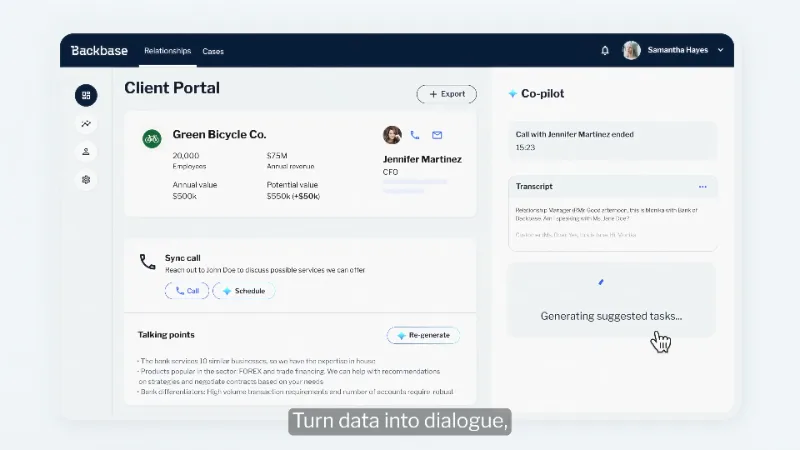
The illustrated-character-at-a-laptop explainer is fading for SaaS. Buyers want to see the product, and the tooling to animate real interfaces cleanly (smooth cursors, tidy synthetic data, UI that moves) has become standard. The 2026 default for a software explainer is a hybrid: a short animated setup for the problem, then the real product doing the work. Look at the best SaaS explainer examples and count how many hide the interface. Almost none.
3. One production, ten outputs
Nobody buys “a video” any more. The brief is a master plus vertical and square cuts, two or three ad clips, a GIF for the README or email, a captions file, a thumbnail, and translated versions. Studios that still quote the master and charge for each derivative are being replaced by ones that scope the system from the start. This is why our pricing lists every format in the flat price, and why repurposing is planned at script stage, not after delivery.
4. AI in the pipeline, humans on the screen
AI is now everywhere in production: dubbing a finished video into ten languages, cleaning audio, generating script variants for testing, upscaling, rough storyboards. What it has not taken over is the part the viewer sees. AI-generated hero videos and avatar presenters still read as synthetic to a cold audience, and that reading costs trust. The sensible 2026 position: use AI to make the production faster and cheaper, and use humans for the voice, the design judgement and anything on camera. Both AI generators versus studios and AI avatars for SaaS go into detail.
5. Videos get quoted by AI search
ChatGPT, Perplexity and Google’s AI Overviews now cite video pages when they carry a transcript, a clear description, VideoObject schema and an answer in the first paragraph. A video on a bare page is invisible to them. In 2026 the publishing checklist includes the transcript, the schema and a written summary, which doubles as the accessibility work you should have been doing anyway. See how to get videos cited by AI.
Trends to treat with suspicion
- Interactive and branching video. Impressive in demos, rarely used by real visitors, expensive to maintain. Interactive product tours (click-through demos) are a different, useful thing; see product tour versus demo video.
- 3D for everything. Full 3D costs two to three times 2D and rarely explains software better. Use it for physical products and for the one hero shot that needs it. 2D versus 3D cost has the numbers.
- Vertical-only. Vertical cuts are essential; a vertical-only strategy abandons the homepage, the sales deck and the app store landscape slots. Make the master in 16:9 and derive.
- Ultra-short as a rule. Fifteen-second attention spans are an ad-platform story. On a homepage, cold visitors still watch 60 to 90 seconds of a clear explainer; our length benchmarks show where completion actually drops.
- Trend-styled visuals. Grainy gradients, brutalist type, glassmorphism. Each dates the video to the quarter it was made. Brand-led design ages; trend-led design expires.
What did not change
The script decides the result. A clear problem, one workflow shown end to end, one proof point and one ask outperform every visual trend on this page. Human voice-over still signals quality more than any other single element. And the homepage video is still the highest-leverage 75 seconds on a SaaS site. The trends above change how the video is made and distributed; they do not change what makes it work. For that, the six mistakes that kill conversions are as current as ever.
A 2026 checklist for your next explainer
- Script written for mute, with a text beat per claim.
- Real product UI for the solution section.
- Master in 16:9 at 4K, plus vertical, square, ad clips, GIF, captions, thumbnail scoped in the brief.
- Human voice; AI dubbing for additional languages.
- Transcript, written summary and VideoObject schema on the page it lives on.
- Source files delivered, so the UI can be updated next year without a new video.
Quick questions
Are explainer videos still worth it in 2026?
Yes. Explainers remain the most-used marketing video format, and for software the hybrid real-UI explainer is more effective than it was five years ago because viewers expect to see the product.
Will AI replace explainer video studios?
It is replacing parts of the pipeline, which lowers prices and speeds delivery. It is not yet replacing the script, the design judgement or the human voice, which are what a viewer responds to.
What length is standard now?
60 to 90 seconds for the homepage, 15 to 30 for ads and app stores, two to four minutes for sales-stage demos.
What is the biggest change for buyers?
You should be buying a system of formats, not a file, and you should expect source files and a transparent price. If a studio cannot tell you both on the first call, that is the trend to act on.