By Zahid Nawaz, Founder of Motion Graphix ·
Quick answer: For software, animation wins most of the time, because the product has no physical form to film and the interface is the proof. Live action wins when the message is trust rather than function: a founder, a customer, a team, a real environment. Live action also costs more and changes more slowly. The best answer for many SaaS teams is a mix: a real person for 15 seconds of credibility, animated UI for 60 seconds of proof. Here is how to decide, what each costs, and the questions that settle it.
The decision in one question
What does the viewer need to believe at the end of the video? If the answer is “that this product does X”, animate it, because you can show X cleanly, control every pixel, and update it when the product changes. If the answer is “that these people are credible”, film them, because no animation makes a stranger trust a company the way a real face does. If the answer is both, which it often is for a homepage, mix them. Our guide to mixing footage and animation covers the how; this article is about the choice.
Where animation wins
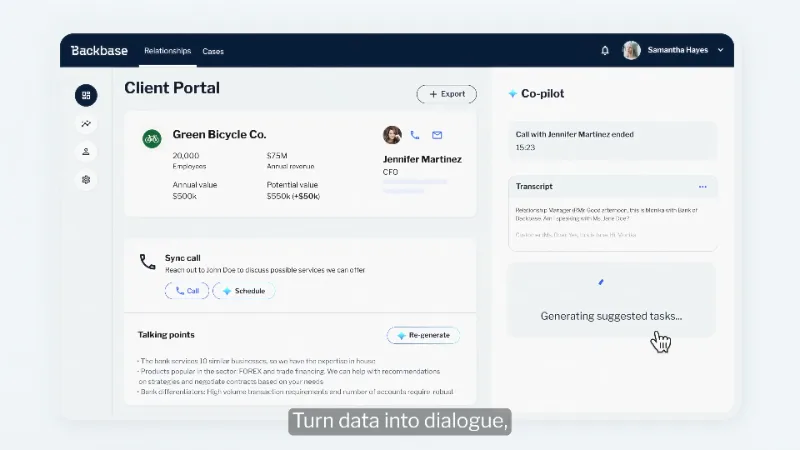
- The product is software. There is nothing to film except a screen, and a screen looks better animated than recorded: smooth cursors, tidy data, no notifications, no mouse jitter.
- The concept is abstract. Data moving between systems, money crossing borders, a model graph. Animation makes invisible things visible, which is most of what SaaS does.
- The product will change. Animated UI can be updated from source files in hours. A filmed screen with a presenter pointing at it is locked to that version.
- You need many variants. Languages, verticals, A/B tests of the hook. Swapping a voice-over and a few text layers is cheap in animation and a reshoot in live action.
- Budget and timeline. No crew, no location, no talent, no weather. A 60 to 90 second animated explainer is $1,450 at our studio with a first draft in 10 to 15 working days.
Where live action wins
- The founder is the pitch. Early-stage companies, personal brands, founder-led sales. See why faces beat logos.
- Customer testimonials. An animated testimonial is, to a viewer, a fake one.
- A real environment carries the story. A warehouse for logistics software, a lab for a compliance platform, a clinic for healthtech. Our Age_REcode video cut real lab footage against the platform because the lab was the proof of quality.
- Emotion over information. Brand films, culture and recruiting videos, launch moments where feeling matters more than features.
- The audience distrusts polish. Developers and technical buyers often respond better to a real engineer on camera than to a glossy animation.
Cost and timeline, honestly
| Animated explainer | Live action explainer | Mixed | |
|---|---|---|---|
| Typical market price (60 to 90 s) | $3,000 to $15,000 | $10,000 to $50,000 | $8,000 to $30,000 |
| Our price | $1,450 | $1,450 (remote-directed recording) | $1,450 |
| Timeline | 3 to 6 weeks (our first draft: 10 to 15 working days) | 4 to 10 weeks with a shoot | 4 to 8 weeks |
| Cost to update later | Low (source files) | High (reshoot) | Medium |
| Localisation | Easy (dub and swap text) | Hard (lip sync, on-camera language) | Medium |
| Trust signal | Medium | High | High |
| Shows software clearly | High | Low to medium | High |
The live action figures above assume a crew and a location. Our live action work is remote-directed: the founder or presenter records with guidance from us, and we handle edit, graphics, sound and every cut, which is why the price matches animation. See live action videos for how that works and explainer video cost for the market context.
The mixed format, which is usually the answer
A typical structure: a real person on camera for the opening problem statement (10 to 15 seconds), animated or captured UI for the solution (40 to 60 seconds), the person back for the proof and the ask (10 to 15 seconds). Employment Hero’s video does exactly this, with a presenter anchoring the story while each module gets its own clean demo beat. FieldPulse puts a tradesperson on camera to make field-service software human, then lets work orders and checklists show the software clearing the pile. Beehiiv puts a product manager on a keynote stage and lets one subscription flow branch out visually behind her. In each case the person supplies trust and the animation supplies proof, and neither has to do the other’s job.
Questions that settle the choice
- Is there anything physical to film? If no, animate.
- Will the product UI change in the next twelve months? If yes, animate the UI.
- Do we need this in more than one language? If yes, animate or mix.
- Is a specific person part of what we are selling? If yes, film that person.
- Is the viewer cold (homepage, ads) or warm (sales follow-up)? Cold viewers need the proof of the product more than the face; warm viewers often respond to the face.
- What is the budget for updates, not just for the first version? That usually decides it.
Quick questions
Is animation or live action better for a SaaS homepage?
Animation or a mix, in almost every case, because the homepage has to show the product to a cold visitor. Reserve pure live action for brand and founder pieces.
Is live action more expensive?
With a crew and location, two to four times more. Remote-directed live action, which we offer, costs the same as animation.
Which converts better?
For software, the hybrid real-UI explainer converts best in our data, because it combines a human trust signal with visible proof of the product. Pure live action without product footage tends to convert worst on a homepage because the viewer never sees what they would be buying.
Can we start with animation and add live action later?
Yes. Many clients add a founder or customer segment to an animated explainer after launch. Keeping the source files makes that a short edit, not a new project.